The Art of Looking Like You Have Nowhere to Be (And Why It's Everywhere Right Now)
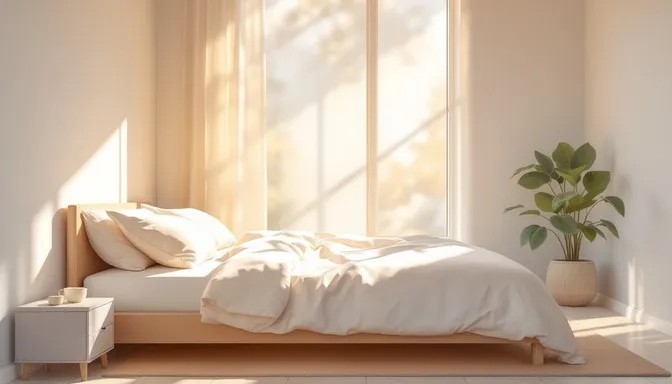
Photo: teenager relaxing aesthetic bedroom minimalist sunlight peaceful morning, via images.stockcake.com
The video is maybe thirty seconds long. A sun-drenched bedroom, white curtains drifting in a breeze that seems engineered by God himself. A half-read book on a nightstand. An iced coffee — the expensive kind, not the gas station kind — sitting perfectly condensated on a marble surface. No voiceover. No trending sound. Just the soft ambient noise of a Sunday that has absolutely nowhere to be.
The caption? Something like "my schedule said nothing and I said perfect."
It has 2.3 million views.
Welcome to the doing-nothing aesthetic — the most carefully constructed performance of laziness the internet has ever produced.
What's the Vibe, Exactly?
If you've been on TikTok or Pinterest recently, you've seen it spreading like a slow exhale. Teens curating content around empty weekends, quiet mornings, luxury minimalism. The visual language is specific: neutral tones, soft light, expensive-looking simplicity. A playlist called something like "songs for people who have given up on being productive." A journal that's barely been written in. Clothes that look like they cost nothing but definitely cost something.
The core message is: I am unbothered. I am unhurried. I have the radical luxury of doing absolutely nothing.
And right now, among US teens especially, that message hits different.
This aesthetic has roots in a few overlapping cultural moments — the quiet luxury trend that swept fashion, the romanticize-your-life wave on BookTok, and a post-pandemic exhaustion that never fully went away. But it's evolved into something more specific: the performance of having so little pressure on your life that you can afford to waste entire days doing essentially nothing of consequence.
The Playlist Mood
Music plays a huge role in building this aesthetic, which is probably why it's taken off so hard on streaming platforms alongside social media. The sonic world of "doing nothing" has its own distinct soundtrack — and it's worth paying attention to, because it tells you a lot about what teens are actually feeling underneath the linen-and-marble surface.
Think slow, hazy indie. Artists like Gracie Abrams, boygenius, and Phoebe Bridgers show up constantly in these playlists. So does older ambient stuff — Brian Eno getting rediscovered by 16-year-olds who weren't alive when Music for Airports came out. Jazz playlists with names like "coffee shop you don't need to be productive in." Lo-fi that's less about studying and more about existing.
The common thread is music that doesn't demand anything from you. No hype, no motivation, no call to action. Just sound that wraps around stillness.
"I literally built a playlist called 'bored rich kid hours' as a joke and it has like 40,000 saves now," says Destiny, 17, from Nashville. "I think people are just tired. The music that fits this vibe is music that lets you breathe."
There's something genuinely interesting happening there — beneath the aesthetic posturing, a real emotional need is being expressed. The desire to slow down, opt out, and just exist for a minute without productivity metrics attached.
The Curation Behind the Effortlessness
But here's the contradiction that lives at the center of this whole trend: looking like you're doing nothing takes a surprising amount of doing something.
The "effortless" bedroom shot requires good lighting, a tidied space, probably a ring light or a phone propped at the right angle. The iced coffee needs to be from the right place. The book in frame is often chosen for its cover as much as its content. The outfit — usually something that reads as "I just threw this on" — is frequently from brands like Aritzia, Reformation, or Madewell, where "throwing something on" can run you $90 minimum.
This is the great open secret of the doing-nothing aesthetic: it's actually a tremendous amount of work, taste-curation, and yes, money.
"People act like it's just vibes but there's a whole production behind it," says Cole, 18, from Seattle. "The girls who do it best have ring lights, good cameras, and wardrobes that cost more than my mom's rent. It's not nothing. It's a very specific kind of something."
The Class Thing Nobody Wants to Talk About
And that brings us to the part of this trend that gets uncomfortable fast: what it actually signals when you can perform having nothing to do.
Historically, leisure has always been a status symbol. The idea that your time is yours — not owed to a job, a second job, or the logistics of just getting through the week — has always been a marker of class. The doing-nothing aesthetic is, in many ways, just that old idea repackaged for the algorithm.
For teens whose families are comfortable, opting out of productivity is a genuine option on weekends. For teens working part-time jobs, helping out at home, or navigating real financial stress? The "empty schedule" aesthetic isn't a vibe — it's a fantasy.
"I think it's cool-looking but it's not my life," says Amara, 16, from Detroit. "I work Saturdays. My weekends aren't some peaceful linen-curtain moment. I don't think the people making that content are thinking about that, though."
That gap — between the aesthetic and the reality most teens are actually living — is worth sitting with. Not to cancel the trend, but to be honest about what it's actually selling: not just a mood, but a lifestyle that requires a particular kind of financial cushion to authentically inhabit.
Burnout or Performance? (Why Not Both?)
Here's the nuance that gets lost when people dismiss this trend as just shallow posturing: some of it is genuinely coming from a real place.
Teens in the US are measurably more stressed than previous generations. Academic pressure, social media comparison, economic anxiety, a news cycle that never turns off — there's a reason the idea of doing absolutely nothing sounds like paradise to a lot of 16-year-olds. The desire to slow down is real, even when the expression of it is heavily curated.
The doing-nothing aesthetic is, at its most honest, a fantasy of rest. A collective exhale from people who are tired of optimizing, performing, and proving themselves.
The problem is that even the fantasy gets turned into content. Even rest becomes a product. And somewhere in there, the actual rest — the kind that doesn't get filmed, doesn't get captioned, doesn't get posted — gets lost.
Maybe the most rebellious version of this trend isn't the perfectly lit Sunday morning video. Maybe it's the afternoon you actually do nothing, and don't tell anyone about it at all.