Obsessed With a Decade You Barely Remember? Here's Why Gen Z Can't Let Go of the Past
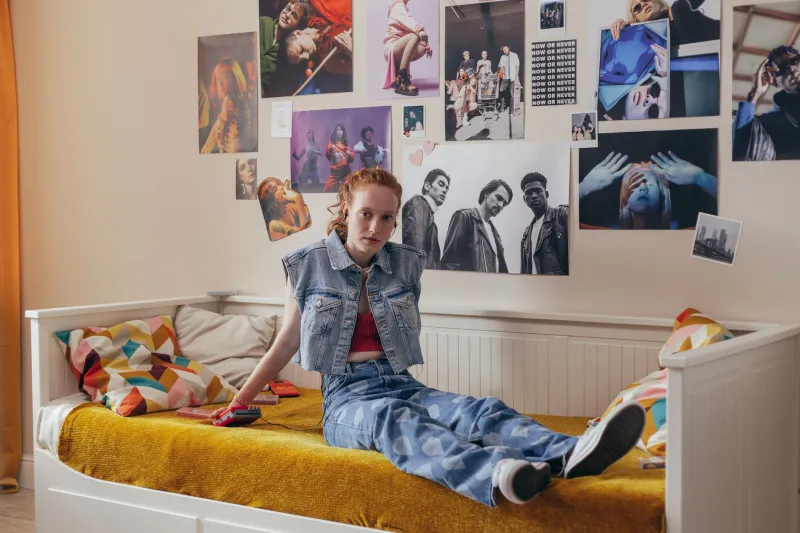
There's a very specific kind of TikTok that keeps showing up in everyone's feed. It's got a Hilary Duff song playing underneath it. The font looks like it was made in Windows XP. The filter gives everything that slightly overexposed, early-digital-camera quality. And the caption says something like "I was born in the wrong era."
The person posting it? Born in 2006.
This is the Gen Z nostalgia paradox, and it's genuinely one of the more interesting things happening in teen culture right now. A generation that grew up entirely in the smartphone era — that never knew a world without WiFi, streaming, or social media — is completely obsessed with the aesthetic of a time they didn't actually experience. And the obsession isn't slowing down. If anything, it's getting more intense.
So what's actually going on here?
The Aesthetic Is Just the Surface
Let's start with what's visible, because the fashion alone is worth unpacking. Y2K style has been having a moment for a few years now and it genuinely doesn't seem to be winding down. Low-rise jeans. Baby tees. Velour tracksuits. Platform flip-flops. Micro bags. Rhinestones on everything. It's all back, and it's everywhere — from thrift stores in Brooklyn to the clearance racks at Target.
But it's not just clothing. It's the whole sensory package. People are buying disposable cameras because they want that grainy, imperfect photo quality. They're making playlists that sound like they belong on a NOW That's What I Call Music! CD. They're rewatching early 2000s Disney Channel movies and early seasons of shows that ended before they were even in middle school.
The aesthetic is a full vibe, and Gen Z has adopted it with a level of dedication that goes way beyond trend-chasing. This isn't like when everyone briefly got into cottagecore and then moved on. The pull toward the early 2000s and early 2010s feels more personal than that.
Why Does a Time You Didn't Live In Feel Like Home?
This is where it gets psychologically interesting. Nostalgia, by definition, is supposed to be about your own memories — the warm, slightly fuzzy feeling of remembering something good from your past. But what Gen Z is experiencing is something researchers have started calling vicarious nostalgia or ersatz nostalgia: a longing for a time you didn't actually live through, absorbed secondhand through media, older siblings, and cultural artifacts.
And it turns out that kind of nostalgia hits just as hard as the real thing — maybe harder, because it's idealized. You're not nostalgic for the actual experience of the early 2000s, which included a lot of genuinely terrible stuff. You're nostalgic for the feeling you've constructed around it: simpler, slower, more tactile, less surveilled.
That last word matters a lot. Less surveilled. Think about what it means to grow up in 2024 versus 2004. In 2004, a teenager's embarrassing moments had a limited blast radius. They happened in front of a small audience and then mostly disappeared. In 2024, everything is potentially permanent, potentially viral, potentially screenshot-able. Every social interaction carries a layer of performance pressure that simply did not exist in the same way twenty years ago.
The early internet — AIM, Myspace, early YouTube — looks like a playground from here. Chaotic, yes. Cringe, absolutely. But also weirdly free. Nobody was building a personal brand at 14. Nobody was worried about their engagement rate. The stakes felt lower, and for teens drowning in the pressure of the current digital landscape, that's intoxicating.
The Algorithm Made You This Way (Partially)
It would be too easy to say this is all just algorithm-driven trend recycling, but the algorithm definitely plays a role. TikTok and Instagram are extremely good at identifying what makes people feel something — and nostalgia is one of the most reliable emotional triggers there is. Once a few Y2K-coded videos started performing well, the recommendation engine leaned in hard. Now the aesthetic is everywhere, which reinforces the sense that it's culturally significant, which makes more people engage with it.
But here's the thing about trends that spread through algorithms: they usually burn out fast. The fact that this one hasn't — that it's actually deepened and expanded over several years — suggests something more genuine is driving it than just TikTok's For You page.
The Search for an Identity That Feels Yours
There's another layer here that's worth sitting with. Gen Z is the first generation to grow up with a fully commodified version of youth. Every subculture, every aesthetic, every personality type has been packaged, labeled, and sold back to them almost immediately. Cottagecore. Dark academia. Clean girl. Indie sleaze. The labels come fast, and they flatten everything.
The early 2000s, by contrast, feels like a time before all that — before the internet made every micro-trend instantly global and immediately exhausted. Adopting that aesthetic is partly a way of reaching for something that feels like it existed before the machine got to it.
Of course, the irony is that the nostalgia itself has now been packaged and sold. There are entire brands built on Y2K aesthetics. Fast fashion is cranking out early-2000s-coded pieces by the millions. The thing Gen Z is reaching for — something raw and unprocessed — is getting processed in real time.
What It Actually Says About Right Now
If you want to understand any generation's nostalgia, you have to look at what they're escaping from. For Gen Z, the present is loud, relentless, and exhausting in a very specific way. The content never stops. The news cycle never stops. The performance of self never stops.
The early 2000s, filtered through the warm glow of distance, looks quiet by comparison. It looks like a time when you could just exist without documenting it. When a good song was just a good song, not a sound you used to build your brand.
That's what the butterfly clips and the Motorola Razr aesthetics are really about. Not the decade itself — but the feeling of breathing room that Gen Z has been told existed once and is having a really hard time finding now.
The nostalgia trap isn't really a trap. It's a signal. And what it's signaling is that a whole generation is hungry for something the present isn't giving them. Whether they find it in the past, or build it themselves in the future, is still being written.